

Mobile windshield repair may be available in San Antonio, and a chip that’s suitable for repair doesn’t always require full windshield replacement. For rock chip repair in San Antonio, the damage’s size, location, and spread help determine whether repair is practical and how long the work may take.
A chip can be stressful, especially when you’re unsure whether you can keep driving or how insurance may apply. This guide explains what affects mobile service, how comprehensive coverage and deductibles typically factor into auto glass claims in Texas, and what can influence repair or replacement timing.
You’ll learn how a technician approaches chip repair, when replacement may be the better solution, and what to expect. That can help you understand your options and plan your next step with less uncertainty.
Key Takeaways
- Prompt attention to a chip can help keep it from spreading; the damage’s size and location influence whether repair is suitable.
- Mobile service can make glass work more convenient, while the vehicle’s condition and the repair needed shape the practical next steps.
- In Texas, comprehensive coverage typically applies to auto glass claims after the deductible; your policy terms affect what you pay.
- Repair and replacement follow different work steps, so the type and extent of damage influence how long the service takes.
Do you offer mobile windshield repair?
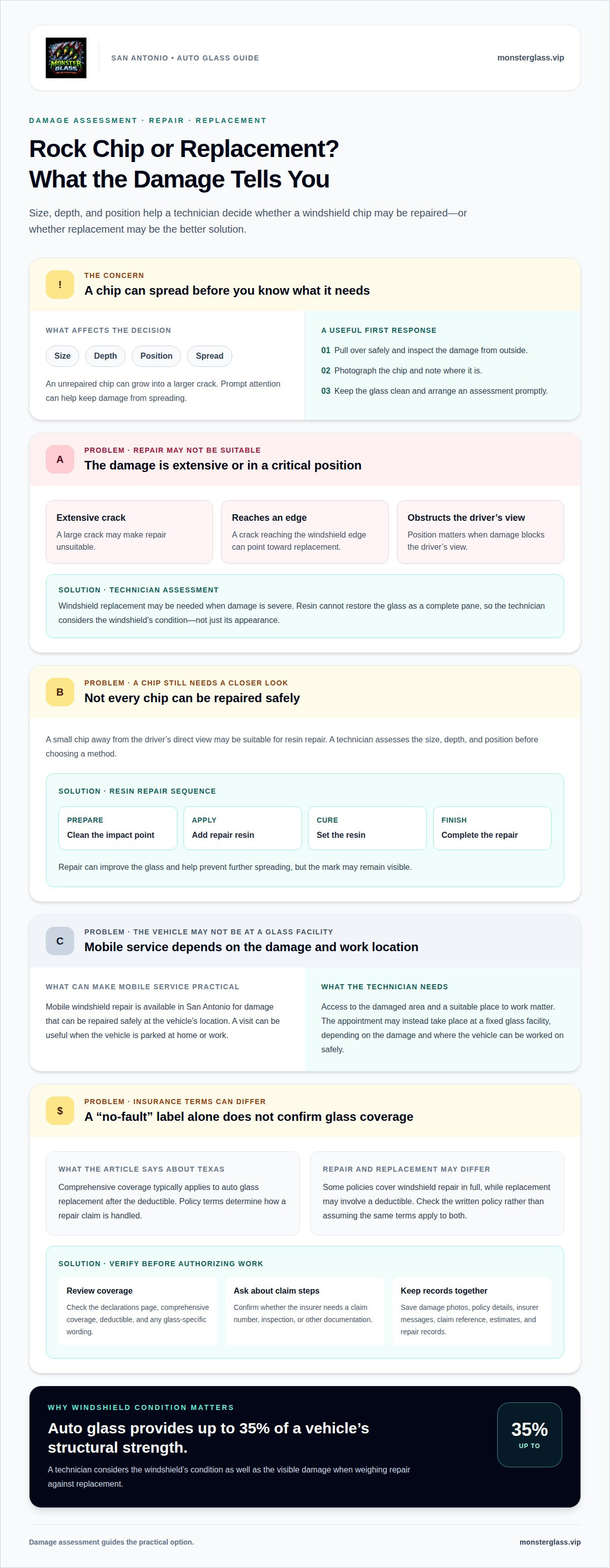
After a rock hits your windshield, pull over safely and inspect the damage from outside. Photograph the chip, note its location, and keep the glass clean. Arrange an assessment promptly, since an unrepaired chip can spread into a larger crack.
Mobile windshield repair is available in San Antonio for damage that can be repaired safely at the vehicle’s location. At an appointment, the technician assesses the chip or crack before choosing a repair method. A mobile visit can be useful when the vehicle is parked at home or work. Access to the damaged area and a suitable place to work matter.
For rock chip repair in San Antonio, technicians assess the damage’s size, depth, and position. A small chip away from the driver’s direct view may be suitable for resin repair. The technician cleans the impact point, applies repair resin, then cures and finishes it. Repair can improve the glass and help prevent further spreading, but the mark may remain visible.
Windshield replacement may be needed when a crack is extensive, reaches an edge, or obstructs the driver’s view. Severe damage can make repair unsuitable because resin cannot restore the glass as a complete pane. Auto glass provides up to 35% of a vehicle’s structural strength, so a technician considers the windshield’s condition, not just appearance.
In San Antonio, a windshield appointment may take place at a fixed glass facility or through mobile service at the vehicle’s location. The suitable option depends on the damage and where the vehicle can be safely worked on. Share the vehicle’s location and a clear photo when arranging an appointment.
A repair alone doesn’t tell you what your insurance renewal rate will be. Separate the repair decision from the policy decision: review your coverage, deductible, and claim terms before filing. Keep the damage photos and repair record together so you can refer to the same details when reviewing your policy.
Insurance coverage and no-fault policies
In Texas, comprehensive insurance typically covers windshield or other auto glass replacement after you pay the deductible. Your policy’s coverage type and terms determine how that applies to a repair claim. A no-fault label alone doesn’t establish whether windshield damage is covered. Review the comprehensive section and any glass-specific wording before deciding how to proceed.
Start by locating your declarations page and policy details. Check whether comprehensive coverage is active, what deductible applies, and whether your policy describes separate glass terms. A deductible is the amount you’re responsible for under the policy before coverage applies. Compare that amount with the claim process, not an assumed repair benefit. Coverage for replacement may also differ from coverage for a repair.
Insurance acceptance and direct billing describe different parts of the process. A glass business may work with an insurer, while direct billing means it submits claim information to the insurer for processing. Neither phrase alone tells you what your policy pays. Before authorizing work, establish whether the insurer needs a claim number, inspection, or other documentation. Keep your insurer’s claim reference with the vehicle and damage details.
Paperwork is easier to manage when you gather it in one place. Save clear photos of the damaged window, your policy information, claim number, and any insurer messages. Match the vehicle details on the claim to your registration and insurance card. If the insurer requests an estimate or proof of completed work, keep those records with the claim. These steps help prevent missing information from slowing review.
For example, a San Antonio driver with comprehensive coverage can review the deductible first, then contact the insurer about claim steps. If the deductible exceeds the expected covered amount, filing may not be useful; if the insurer requires a claim number, obtain it before arranging payment. Policy terms decide the outcome, so use the written coverage details rather than assuming a no-fault policy automatically pays for glass work.
Insurance coverage for auto glass
Auto glass claims can cover repair or replacement, but policy wording matters. Some policies cover windshield repair in full, while replacement may involve a deductible. Compare the repair and replacement provisions before choosing a claim path. A small chip and a windshield requiring replacement may be treated differently under the same policy. Keep the claim number, insurer instructions, and repair records together.
Glass type can also affect the insurer’s approval process. OEM means original equipment manufacturer; OEE refers to equivalent aftermarket glass. Those labels describe different sourcing categories, not a promise about insurance payment. Before work begins, confirm which glass option the estimate describes and whether your insurer requires authorization. For a vehicle with a forward-facing camera, verify that the selected windshield supports the required camera setup.
“OEM-quality” describes quality, but it isn’t automatically the same designation as OEM glass. Review the estimate for the glass type, fit, and any required vehicle-system compatibility. If your insurer approves a particular option, keep that approval with the claim documents. Clear records help connect the approved work to the final invoice and reduce confusion over what the policy covers.
A leak warranty concerns water entering around installed glass. Read the written terms for the covered area, duration, exclusions, and remedy. For example, check whether the document covers leaks around the windshield seal or only specific installation issues. Keep the warranty with the invoice, then record any leak’s location and conditions. This gives you precise details to use when reporting the issue.
For an auto glass repair claim, organize the process in sequence: review your policy, document the damage, obtain insurer instructions, and retain the final paperwork. Texas comprehensive coverage typically applies to auto glass replacement after the deductible. Your policy’s specific terms determine how the claim is handled, including applicable glass choices and payment steps.
Repair and replacement service times
A repair and a replacement involve different steps, so they don’t take equal time. For a chip repair, the technician assesses the impact, prepares the glass, applies resin, then cures and finishes the repair. Damage size, depth, and location affect the work. A small, accessible chip generally involves fewer repair steps than a spreading crack.
Replacement adds removal and installation to the process. A technician removes the damaged windshield, prepares the frame, fits new glass, and checks the installation. Vehicle make, model, glass configuration, and sensor equipment can affect the work. A windshield with a camera near the rear-view mirror may require additional calibration steps. Ask about the expected work sequence when arranging an appointment.
Time at the vehicle and time before driving are separate considerations. After glass replacement, the adhesive needs to set before the vehicle is driven. The required safe-drive-away time depends on the adhesive and conditions during installation. Follow the technician’s specific instructions rather than planning around a generic estimate. This matters especially if you need to collect children, return to work, or travel across San Antonio.
Scheduling can also affect the total time from booking to completion. The correct glass must match the vehicle, and availability can shape the appointment date. Share the vehicle’s year, make, and model, plus details about sensors or trim. Send a clear damage photo if available. These details help identify the repair type and prepare for glass replacement.
For a chip, arranging an assessment before it spreads can keep repair as an option. If the damage reaches the windshield edge or blocks the driver’s view, replacement may be needed instead. Ask for the estimated appointment duration, any required wait after installation, and the next safe driving time. For help with a windshield repair or replacement, share your vehicle details and damage description.
Monster Glass: Windshield Replacement
Monster Glass LLC repairs windshield chips and replaces windshields when the damage calls for it. Its auto glass services also include replacement for other vehicle glass, including car windows. The right service depends on the damaged glass and whether repair remains suitable.
For a contained chip, rock chip repair San Antonio services may address the damage without replacing the full windshield. If a crack is extensive or interferes with the driver’s view, windshield replacement may be the more appropriate route. Sharing your vehicle details and a clear description of the damage can help establish what work is needed.
For windshield damage in San Antonio, contact Monster Glass LLC to discuss repair or replacement, or visit monsterglass.vip.
Make a Clear Plan for Your Windshield
Before contacting a glass specialist, gather the details that describe the damage: your vehicle’s year, make, and model, where the chip or crack sits, and whether it has changed since you noticed it. This can make the service conversation more focused and help you consider repair versus replacement. For rock chip repair in San Antonio, addressing damage before it spreads can keep repair as an option.
Monster Glass offers Windshield Rock Chip Repair, Windshield Replacement, and General Auto Glass Replacement. If your glass needs attention, describe the damage and have your insurance information nearby when you contact the team.
Contact Monster Glass about your auto glass and share what happened. A practical next step can make a stressful windshield issue easier to manage.
Frequently Asked Questions
How long does it take to fix a small windshield chip?
A small chip repair involves preparing the impact point, applying resin, and curing the repair. The work depends on how accessible the damage is and whether the technician finds spreading or additional damage during inspection. When arranging service, describe the chip’s location and share a clear photo. That helps distinguish a straightforward repair from a case requiring more assessment.
What if my windshield damage is too large or severe to be repaired?
If damage can’t be repaired, windshield replacement is the next option. A technician can assess whether the glass needs replacement based on the damage and its effect on the driver’s view. Before arranging the work, have your vehicle’s year, make, and model ready. Those details help identify the correct glass configuration, including any equipment attached to the windshield.
What types of windshield cracks can you fix?
Repair suitability depends on the crack’s pattern, depth, position, and extent, rather than its name alone. A short crack or small star-shaped impact may be assessed differently from a long branching crack. Take photos from outside and inside the vehicle, and note whether the damage has grown. A technician uses those details to determine whether repair is appropriate.
Why Fix Chipped Auto Glass?
Fixing a chip can help stop damage from developing into a crack that requires a different remedy. It also addresses a blemish that may distract you while driving. Drivers in San Antonio, Alamo Heights, Terrell Hills, Olmos Park, Leon Valley, Castle Hills, Shavano Park, Helotes, Balcones Heights, Kirby, Converse, Windcrest, Live Oak, Universal City, and Von Ormy can have damage assessed before it changes.
Will my insurance rate increase?
Your insurer sets your premium under your policy; a glass technician doesn’t determine your rate. Ask your insurer how a windshield claim is handled and whether filing one affects your policy. Have your policy details and claim history available for that conversation. This gives you a clearer basis for deciding whether to submit a claim or pay for the repair directly.
Will my windshield be completely restored after the repair?
A repair restores the damaged area, but it may not make the impact disappear completely. The final appearance depends on the chip’s original shape, depth, and condition. A small mark, for example, may remain visible when light hits the glass at an angle. The goal is to repair suitable damage, not promise an invisible finish or a brand-new windshield.


