

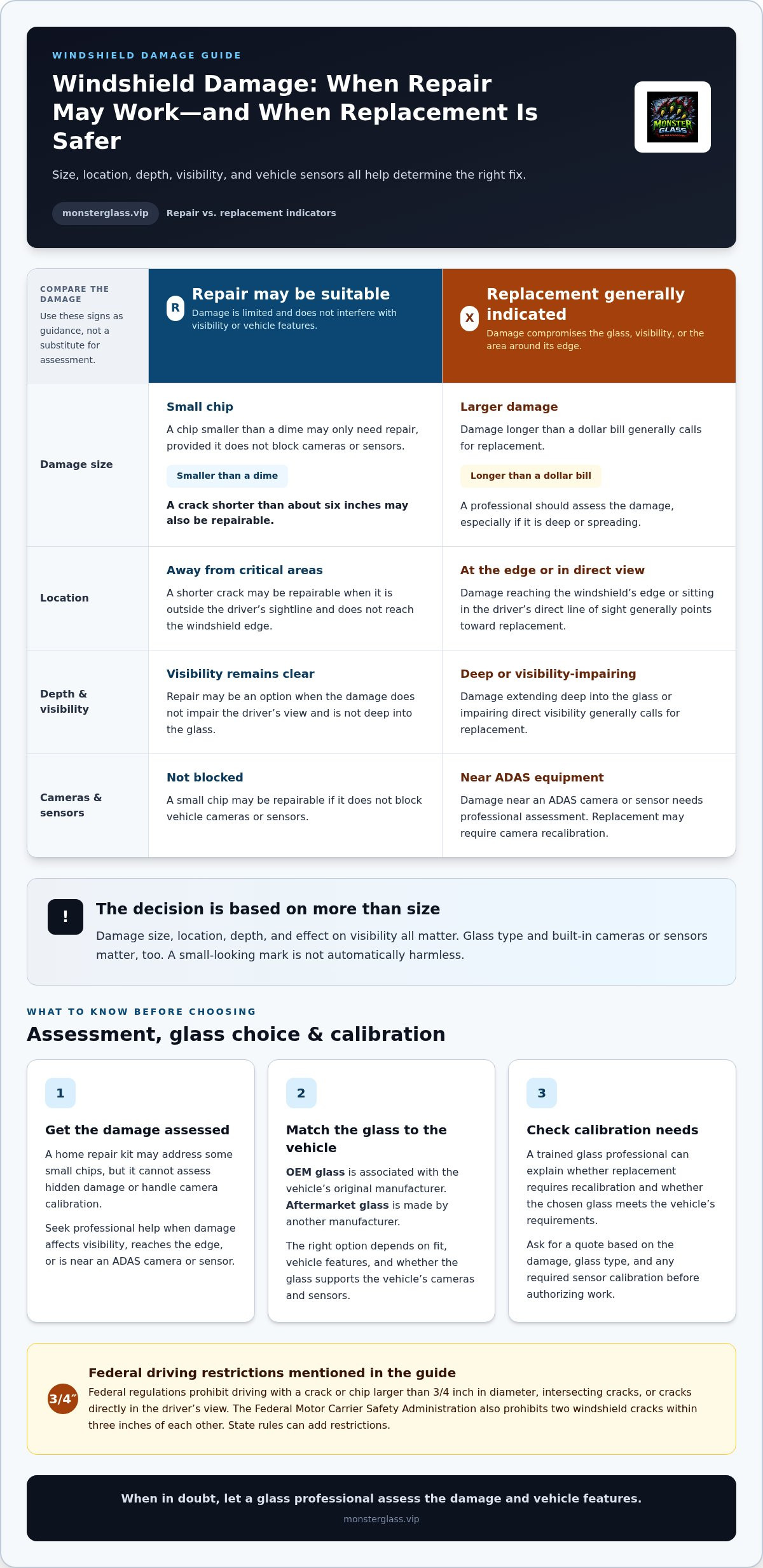
A full replacement isn’t always the right answer for a broken windshield. A chip smaller than a dime that doesn’t block cameras or sensors may only need repair. Damage that reaches the edge, extends deep into the glass, or sits in the driver’s direct line of sight generally points toward replacement.
It’s natural to worry that any crack compromises the entire windshield, but the damage’s size, location, and effect on visibility help determine the right fix. The glass type and any cameras or sensors built into the vehicle matter, too.
This guide explains when repair may be suitable and when replacement is the safer course. You’ll also learn how OEM and aftermarket glass differ, what insurance may cover, and how to reduce the risk of a crack spreading while you arrange service.
Key Takeaways
- Use the damage’s size, location, depth, and effect on visibility to judge whether repair or replacement is more suitable.
- When comparing OEM and aftermarket glass, consider the vehicle’s required features and whether the windshield supports its cameras and sensors.
- Comprehensive coverage often applies to glass damage, while collision coverage may apply when a crash caused it; your deductible affects what you pay.
- Limit crack spread by protecting the damaged area from moisture and rough road impacts, and arrange an assessment promptly.
Can I choose between OEM and aftermarket windshield glass?
A chip smaller than a dime that doesn’t block cameras or sensors may only need repair. A crack shorter than about six inches and outside the driver’s sightline may also be repairable. Damage longer than a dollar bill, reaching the windshield’s edge, or impairing direct visibility generally calls for replacement. OEM glass is associated with the vehicle’s original manufacturer; aftermarket glass is made by another manufacturer. The right option depends on fit, vehicle features, and a professional assessment.
A home repair kit can address some small chips, but it can’t assess hidden damage or handle camera calibration. For a broken windshield, seek professional help when a crack affects visibility, reaches the edge, or sits near an ADAS camera or sensor. A trained glass professional can assess whether the damage is repairable and whether replacement requires recalibration.
Comprehensive auto insurance may cover windshield repair or replacement, depending on your policy and deductible. A crack caused by a collision may fall under collision coverage instead. Before authorizing work, review your glass coverage and deductible with your insurer. Liability-only coverage generally doesn’t pay to repair damage to your own vehicle.
Repair and replacement costs depend on the vehicle, the damage, glass selection, and any required sensor calibration. Ask for a quote based on the damage, glass type, and calibration needs before authorizing work. Insurance coverage and your deductible also affect your out-of-pocket expense, including for chip repair.
Choose an auto glass professional who can explain why repair or replacement suits the damage, identify whether the glass supports ADAS features, and address calibration when needed. Ask how the selected OEM or aftermarket glass matches your vehicle’s requirements. Clear answers about the repair method, installation, and calibration give you a practical basis for deciding.
Replacement time depends on the vehicle, installation process, and any ADAS calibration. Drive only after the installation adhesive reaches its specified safe-drive-away time. Follow the installer’s instructions before moving the vehicle, since driving too soon can affect the windshield’s bond.
Which type of car insurance covers windshield damage?
Comprehensive auto insurance is the main coverage for windshield damage from events such as falling objects or vandalism. Coverage depends on the policy, and the deductible is the amount you pay out of pocket before insurance applies. Check your declarations page for comprehensive coverage, glass-specific terms, and the deductible. A lower deductible can reduce your share of a covered repair, while liability-only insurance generally doesn’t cover damage to your own vehicle.
If a collision caused the crack, collision coverage may apply instead, subject to your policy deductible. The cause matters: a stone striking the glass while driving differs from damage caused by a crash. Some states require insurers to provide windshield replacement without a deductible under comprehensive coverage, while others offer separate glass coverage with a zero or low deductible. State rules and policy terms determine what applies.
Before filing a claim, compare the deductible with the repair decision and ask your insurer how glass claims are handled. A small chip may qualify for repair, while damage in the driver’s direct line of sight, at the edge, or longer than a dollar bill may require replacement. A claim’s coverage category doesn’t determine whether the glass can be repaired; size, depth, and location guide that assessment.
Rules for driving with windshield damage vary by state, and the law of the state where you’re driving applies, including during an out-of-state trip. Federal regulations prohibit driving with a crack or chip larger than 3/4 inch in diameter, intersecting cracks, or cracks directly in the driver’s view. The Federal Motor Carrier Safety Administration also prohibits two windshield cracks within three inches of each other. Damage that blocks visibility or keeps spreading needs prompt attention. If a chip is spreading, arrange windshield rock chip repair before it grows into a longer crack.
Ways to protect a windshield and prevent cracks from spreading
After a windshield breaks, pull over somewhere safe and avoid touching loose glass. Keep the damaged area dry, limit further driving, and arrange an assessment promptly. These steps reduce exposure to moisture and road vibration while you determine whether repair or windshield replacement is needed.
Moisture can enter a chip and weaken the damaged area. Temperature changes, potholes, rough roads, and sharp turns can also make a crack spread. Until the glass is assessed, avoid slamming doors, sudden temperature shifts, and gravel roads. Leave extra space behind other vehicles to reduce the chance of another stone striking the damaged glass.
A cracked windshield can interfere with the driver’s view and weaken a part of the vehicle that supports crash protection and airbag deployment. Damage near an advanced driver-assistance system sensor matters, too: cameras may need recalibration after replacement. Don’t assume a small-looking mark is harmless. Location, depth, and spreading all affect the next step.
U.S. federal regulations prohibit driving with a windshield crack or chip larger than 3/4 inch in diameter, intersecting cracks, or cracks directly in the driver’s view. The Federal Motor Carrier Safety Administration also prohibits two windshield cracks within three inches of each other. State rules can impose additional restrictions, so the applicable requirements depend on where you’re driving.
Cracked-windshield tickets are generally considered non-moving violations. In some states, repeated offenses could result in license suspension, and proof of repair or replacement after a ticket may help a driver avoid a fine. A ticket doesn’t resolve the safety issue. Arrange repair promptly if the damage blocks your view or continues spreading.
- Keep moisture and road impacts away from newly chipped glass.
- Avoid driving if cracks obstruct visibility or intersect.
- Arrange professional assessment when damage spreads or sits near a sensor.
OEM versus aftermarket windshield glass
OEM glass is produced to the vehicle manufacturer’s specifications, while aftermarket glass comes from another manufacturer. Neither label alone tells you whether a particular windshield fits your vehicle’s equipment. Match the glass to the exact make, model, year, and installed features before choosing.
That match matters because one vehicle model can have many windshield configurations. A vehicle manufacturer may offer as many as 20 windshield options for a make and model in a single year. Differences can involve features such as camera or sensor mounting areas. If the windshield supports ADAS, ask how the selected glass accommodates those systems and whether recalibration is needed after installation.
OEM glass can be a sensible choice when you want the manufacturer-specified part. Aftermarket glass can also be suitable when it matches the vehicle’s requirements and is installed correctly. Compare the actual part and its fit, not just the label. An auto glass professional can identify the windshield configuration and explain how it relates to your vehicle’s cameras, sensors, and other features.
Insurance can influence the decision. Comprehensive coverage may cover repairs and replacements, subject to the policy and deductible. Before approving work, ask your insurer whether your coverage allows a choice between OEM and aftermarket glass, and whether the deductible applies. Coverage terms vary by policy, so the glass choice and out-of-pocket amount may depend on your plan.
Mobile installation describes where the work happens, not whether the glass is OEM or aftermarket. In either setting, confirm the selected part matches the vehicle and ask what calibration the ADAS system needs. Even a small sensor shift can affect system performance, so calibration is an important part of replacement when the vehicle requires it.
The practical takeaway: choose glass that fits the vehicle’s exact configuration, then prioritize precise installation and required sensor calibration. If replacement is the right solution, arrange windshield replacement with attention to those details.
Monster Glass: Windshield Replacement
Monster Glass LLC helps San Antonio drivers address windshield damage with replacement or rock chip repair, depending on the glass’s condition and the damage location. If a crack reaches the edge, obstructs your view, or has spread beyond repair, windshield replacement restores a clear barrier for the road. For a smaller chip, windshield rock chip repair may be the more suitable option. Monster Glass LLC also handles general auto glass replacement and car window replacement when damage affects other vehicle glass.
Share the vehicle details and describe where the damage sits when arranging service. That information helps clarify whether repair or replacement is the relevant next step. If your broken windshield is damaged, contact Monster Glass LLC to discuss the appropriate glass service, or visit monsterglass.vip.
Take the Next Step Toward Clearer, Safer Driving
A damaged windshield can disrupt more than your view. It can leave you weighing glass options, insurance details, and how soon to act. Make the next step clear: note where the damage sits, whether it affects visibility, and whether your vehicle has windshield-mounted cameras or sensors. Those details help frame a useful conversation about the right repair path.
If a broken windshield is affecting your drive, don’t let uncertainty keep the decision on hold. Monster Glass can help you move forward with auto glass care suited to the damage. Share what you’ve noticed and get the conversation started without pressure.
Contact Monster Glass for windshield help, and take the next step toward getting back on the road with confidence.
Frequently Asked Questions
How do I know if my windshield can be repaired?
Look at the full damage pattern, not just the largest mark. A professional may consider repair when several small chips, up to three, remain outside the driver’s line of sight. A chip that blocks a camera or sensor, sits near the edge, or has branching cracks can change the decision. Note each damaged spot and its location before assessment.
Can a chipped or cracked windshield pass inspection?
Possibly, but there’s no single nationwide pass-or-fail answer for every chip. State inspection rules differ, and visibility is central: damage that obstructs the driver’s view can lead to a failed inspection or citation. For a San Antonio vehicle, Texas requirements apply. Passing inspection in one state doesn’t establish compliance elsewhere, since local rules can differ.
When should I replace my windshield?
Replace the glass when damage compromises a clear view or affects the windshield’s fit and stability, particularly if it reaches an edge or occupies a large portion of the pane. Replacement is also the practical path when damage prevents required camera or sensor functions from operating correctly. A glass professional can assess whether the damaged area can be repaired effectively.
How can I avoid being pulled over for a cracked windshield?
Arrange repair promptly, especially if the crack crosses your view or continues growing. If an officer issues a citation, proof that the windshield was repaired or replaced afterward may help you avoid a fine. Keep the repair record with your vehicle documents, but don’t assume documentation makes obstructed glass safe to drive. Address visibility problems before getting back on the road.
Is it safe to drive with a cracked windshield?
With a broken windshield, don’t drive if cracks block your sightline or make it difficult to judge traffic clearly. The windshield also supports vehicle structure and helps position the passenger-side airbag during deployment. If a crack suddenly grows or loose glass threatens occupants, stop somewhere safe rather than continuing the trip. Arrange an assessment before driving again.
Should you file a claim or pay out of pocket?
Compare your insurer’s coverage and deductible with the repair estimate before deciding. If comprehensive coverage applies but your deductible is higher than the repair amount, paying directly may cost less. If a collision caused the damage, review collision coverage instead. Your decision depends on the policy terms, deductible, cause of damage, and work needed to restore the glass.


